Discover how step frequency, musculoskeletal alignment, and active recovery cycles create lasting movement resilience and daily endurance.
Generating your personalized movement cadence and mobility recommendations based on biomechanical parameters.
Increasing step frequency by 5-10% significantly reduces impact forces on hip and knee joints while optimizing caloric expenditure.
Active spinal elongation and hip neutral positioning counteract the compressive fatigue associated with prolonged desk work.
Structured low-intensity cadence walking facilitates lymphatic circulation, downregulates autonomic stress, and enhances sleep depth.
Human locomotion is a harmonic system governed by stride length and step cadence. When walking at a sluggish cadence with overextended strides, ground reaction forces surge directly into the heel and lower back.
By adopting an intentional cadence of 105 to 118 steps per minute, load distribution shifts dynamically to the calf and plantar musculature, protecting cartilage structures and cultivating sustainable daily mobility.

Designed for desk professionals, recreational walkers, and endurance enthusiasts seeking biomechanical balance.

A 20-minute daily walking protocol engineered to synchronize step tempo, restore natural stride rhythm, and overcome morning stiffness.

Targeted micro-stretching intervals for office environments to decompress thoracic vertebrae and release chronically tight hip flexors.

Progressive pacing routines for recreational runners and brisk walkers looking to build cardiovascular endurance safely.
In-depth analyses from our editorial team on walking physiology, sleep hygiene, and functional longevity.

How shorter, quicker steps decrease peak tibial acceleration and preserve articular cartilage over decades of walking.
Read Analysis →
Restoring ten degrees of talocrural mobility unlocks effortless toe-off mechanics and prevents compensatory knee strain.
Read Analysis →
Pairing morning optical light exposure with evening parasympathetic cool-downs to optimize restorative stage-three sleep.
Read Analysis →PeakCadence operates as an educational and technical movement consultancy. Every protocol, assessment index, and physiological guide is created with rigorous review protocols.
The project is maintained and published by OMNIS WET SPÓŁKA Z OGRANICZONĄ ODPOWIEDZIALNOŚCIĄ, a registered corporate entity in Warsaw, Poland. Under the direction of Diamanta Kazlauska, our team bridges exercise physiology research and ergonomic daily habits.
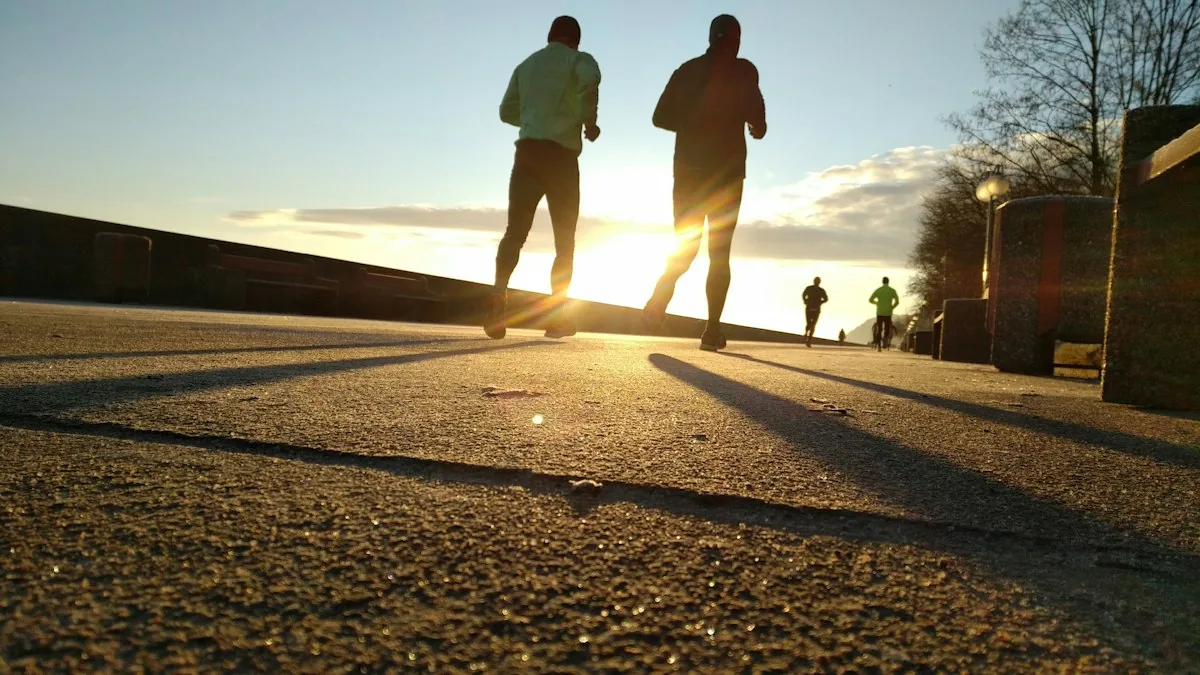
Understanding the science of cadence, movement ergonomics, and our educational resources.
Walking cadence refers to the number of steps taken per minute (steps/min or SPM). Maintaining an optimal cadence (generally between 100 and 115 SPM for steady walks) reduces joint stress, improves muscular efficiency, and prevents overstriding.
Higher step frequency encourages a midfoot or controlled heel landing directly beneath the center of gravity. This eliminates braking forces, enhances hip extension, and promotes fluid joint range of motion.
Yes. Our 4-step self-assessment automatically adjusts guidance based on current sedentary exposure and step volume, providing graduated progressions that respect joint adaptation timelines.
PeakCadence is operated and published by OMNIS WET SPÓŁKA Z OGRANICZONĄ ODPOWIEDZIALNOŚCIĄ, located at ul. Krzyżówki 13B/33 in Warsaw, Poland. Full entity credentials are confirmed in the Polish National Court Register (KRS: 0001028166).